ServicesWell Water Filtration
Well Water Filtration in Norwalk
Orange stains in the sink, a rotten egg smell from the tap, sand in the aerators. Those are well water problems, and a filter matched to your well can fix them. We fit the system on your main line and leave you water you want to use.
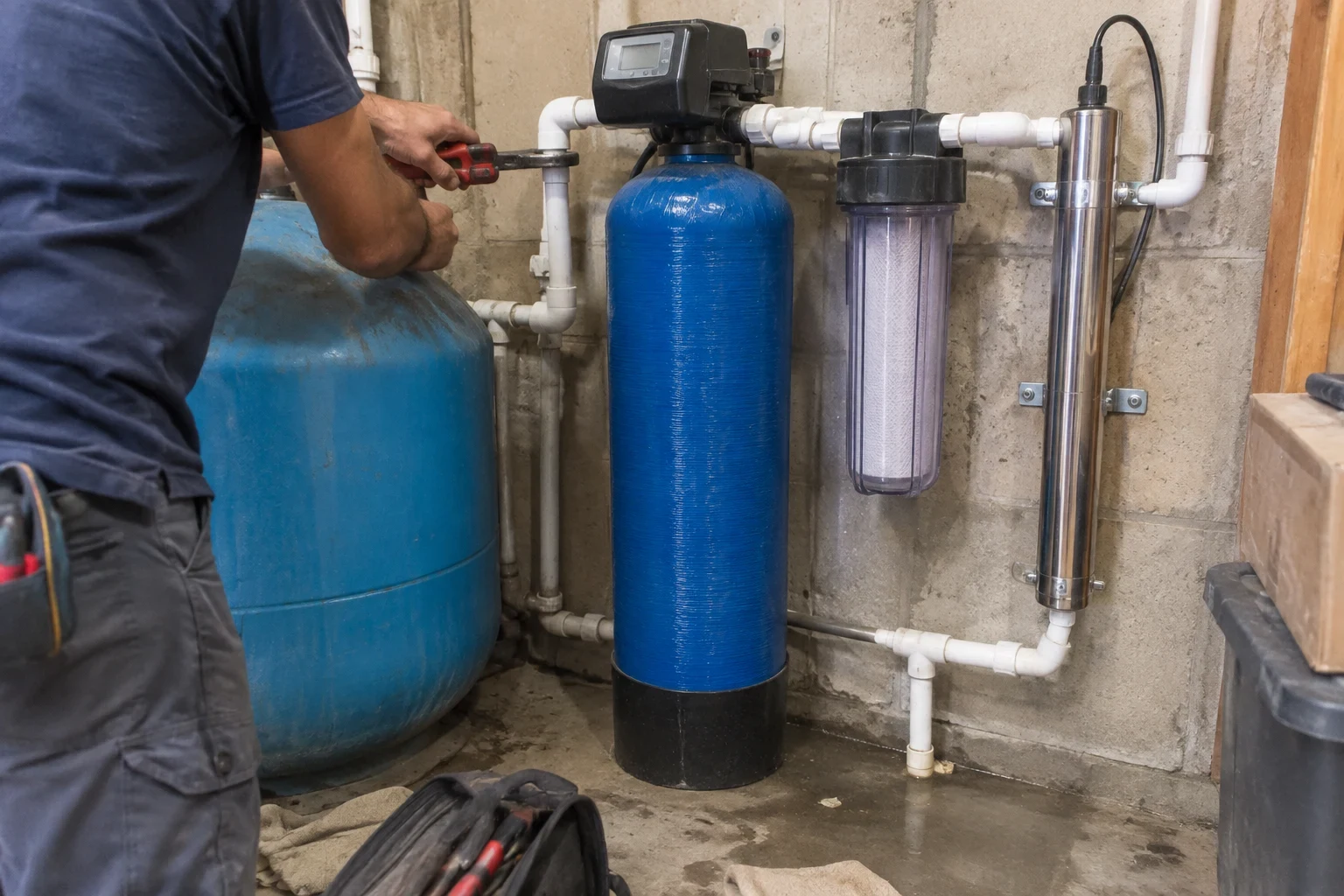
What well water filtration does for your home
City water arrives already treated. Well water doesn't. It comes up from the ground carrying whatever is down there, and that often means fine sand, dissolved iron, manganese or hydrogen sulfide gas. No two wells behave quite the same, so a filter for a well has to be picked for that well.
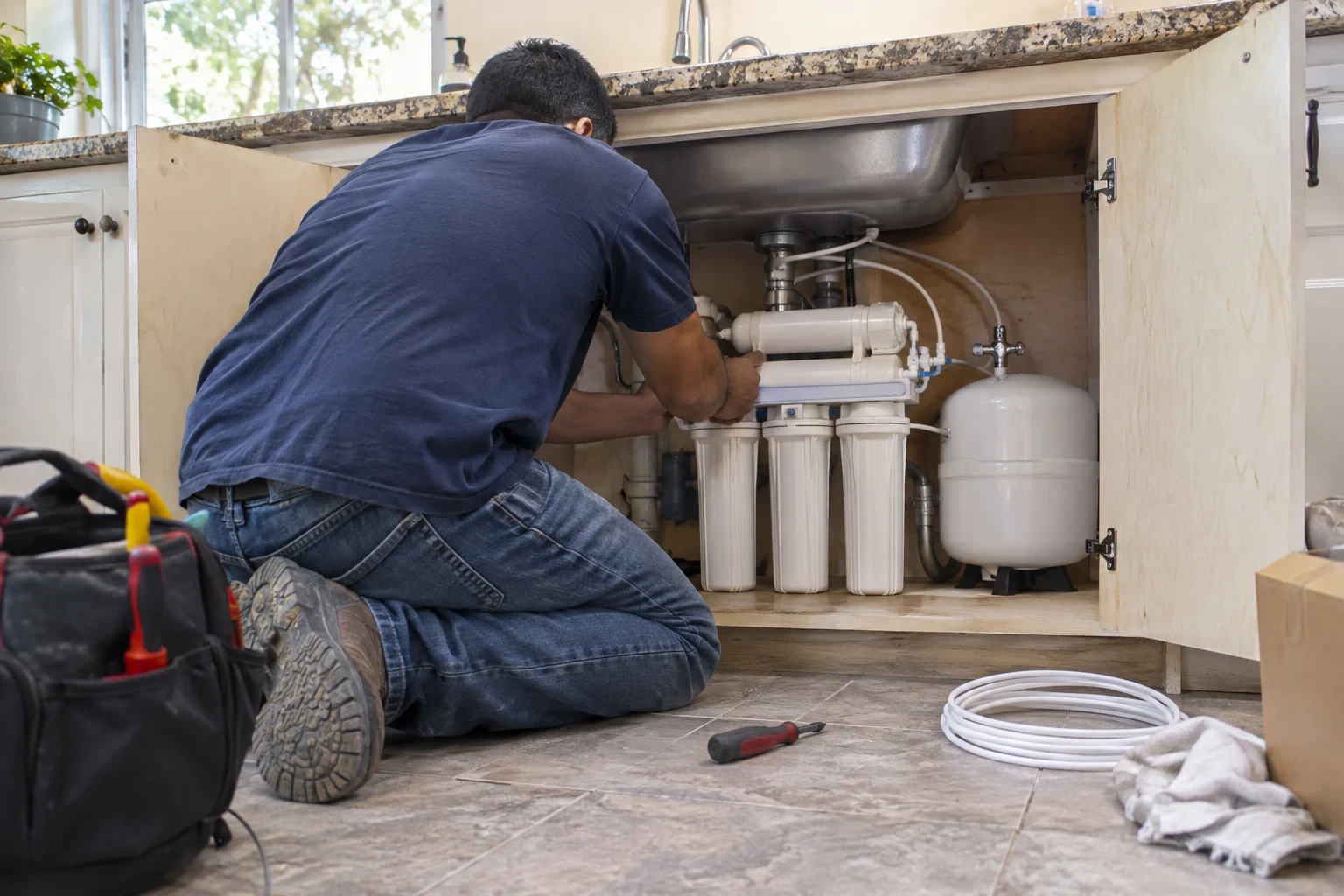
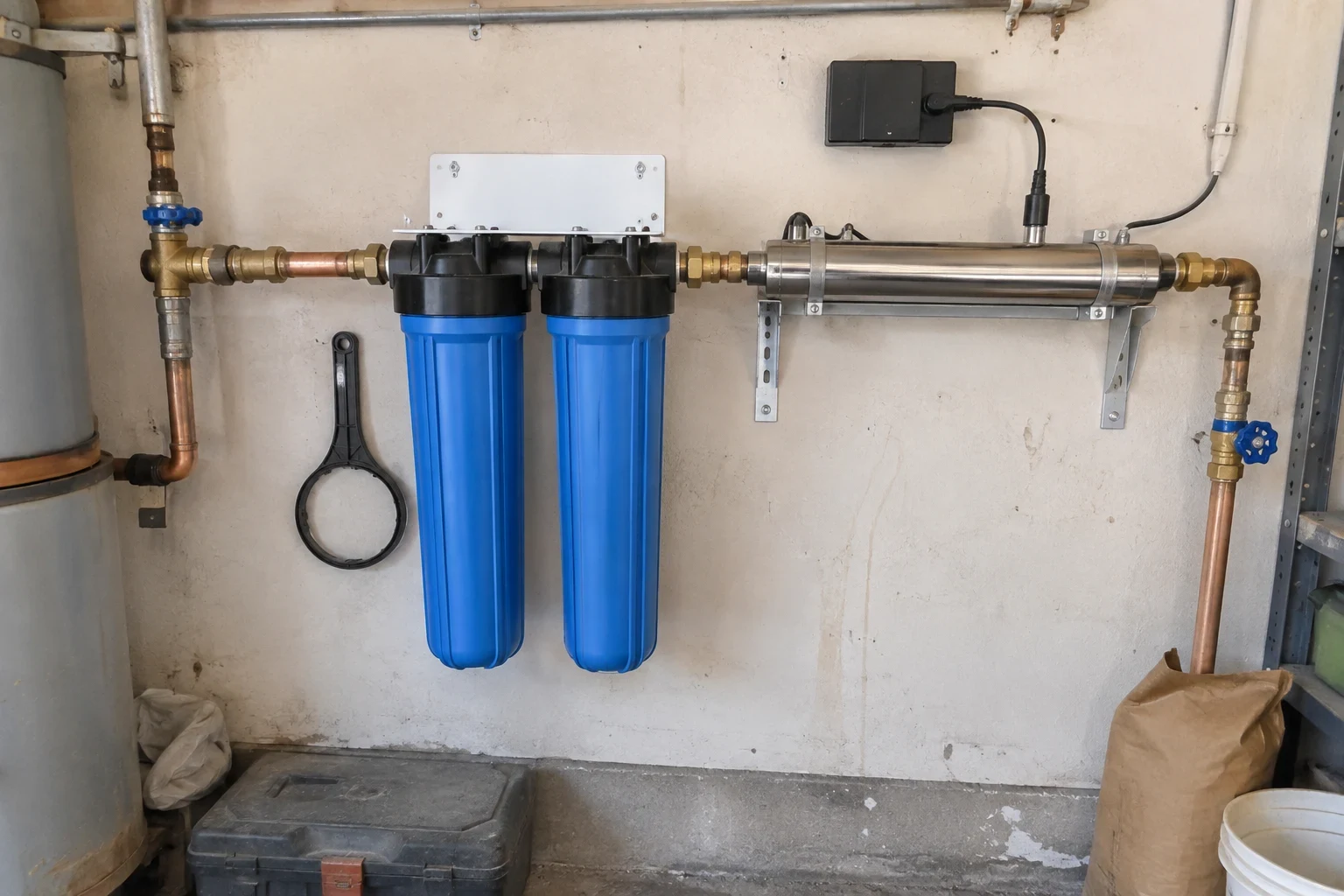
We install filtration on the line right after your pressure tank, so every tap in your home gets the filtered water. Most setups start with a sediment stage to catch grit, then a stage aimed at the main problem, such as iron or sulfur. Some folks also want a glass of water that's as clean as it gets. For that, we can add a reverse osmosis system at the kitchen faucet on top of the main filter.
Our installers are licensed plumbers in California. We work in your home the way we'd want a neighbor to work in ours: shoes covered, floors protected, and a straight answer about what you need and what you don't.
What the job includes
- Checking your well hookup
- First we inspect the pressure tank, the pipe running in from the well and the place the filters will go. We also ask what you notice at the faucets, because stains and odors tell us what the water carries.
- Sediment filtration
- The first filter traps sand and silt ahead of everything else. That shields the stages after it and keeps grit away from faucets, valves and appliances.
- Iron and sulfur reduction
- If you see orange or black stains or smell rotten eggs, we add a stage made to remove them. The exact stage comes down to how your water behaves.
- Proper plumbing work
- We fit shutoff valves and a bypass loop, so changing a filter or making a repair never leaves the house without water. Each connection is built to code and pressure-tested for leaks.
- Free install
- Installation is free, since we cover that cost. You pay only for the equipment your well calls for, and you hear what that is before we begin.
Signs your well water needs a filter
Orange or rust stains
Red-brown rings in toilets, tubs and sinks usually mean iron. It also stains laundry and can build up inside pipes over time.
A rotten egg smell
That smell is often hydrogen sulfide gas. It tends to be worse with hot water and first thing in the morning.
Grit in aerators and screens
If faucet aerators clog with sand or you feel grit at the bottom of a glass, sediment is getting through. It wears out valves and appliance parts.
Cloudy or off-color water
Water that looks hazy or yellowish when it comes out may be carrying fine particles or dissolved minerals.
Metallic taste
A tinny or bitter taste in coffee and drinking water often points to iron or manganese.
What moves the cost
We cover the cost of the install itself. What changes from one home to the next is the equipment your well actually needs. We walk you through the options on the call and at the visit so you know what you're paying for.
What's in the water
Sediment alone needs a simple filter. Iron, manganese and sulfur together need more stages, and heavier loads need bigger units.
Flow and household size
A home with several bathrooms running at once needs a system that keeps up without dropping your water pressure.
Space at the pressure tank
Tight spots or old, corroded piping near the tank can mean extra fittings or repiping a short run.
Ongoing filter changes
Cartridge-style stages need replacing on a schedule. We tell you how often so there are no surprises later.
How the work goes
- 1
You call and tell us what you're seeing
We ask about any stains or odors, how many people are in the house and how your well is set up. If you have a recent lab report on the water, keep it nearby and we'll read through it together.
- 2
We come out and look
We check the pressure tank and the room around it. Then we tell you which filter stages are worth it and why, and which ones you don't need.
- 3
Install day
We turn off the water, cover the floor and plumb in the system with a bypass. Most jobs take part of a day. We tell you up front how long the faucets will be off so you can work around it.
- 4
Flush, check and walk you through it
We rinse the new filters, look over each joint for leaks and open the taps. After that we point out the bypass valves, show you which cartridges get changed and how often, and clean up before we leave.
Well water filtration questions
Do I need a filter if my well water looks clear?
Not always. Clear water can still carry iron that only shows as stains later, or a smell that comes and goes. If the water looks, smells and tastes fine and nothing is staining, you may not need much. We'll tell you that straight.
Will a filter lower my water pressure?
A filter sized right for your home shouldn't cause a noticeable drop. Pressure problems usually come from an undersized system or clogged cartridges. We size for your household and show you when to swap filters.
Can you use my existing pressure tank?
Usually, yes. The filter goes on the line after the tank. If the tank or the piping around it is in rough shape, we'll point it out and explain your choices.
What does the warranty cover?
You get a free 3-year warranty on all units we install. If a unit fails in that time, call us and we'll come back out to make it right.
Should I add reverse osmosis too?
It depends on how you use your water. The main filter handles stains, smell and grit for the whole house. If you want extra-clean water for drinking and cooking, our Reverse Osmosis page explains how an under-sink unit adds that.
Let's sort out your well water
Give us a ring and tell us about the stains, smells or grit you're seeing, plus a bit about your well. We'll explain what we'd put in and why. Then we'll set a day that suits you, here in Norwalk or in a nearby town like Downey or Whittier.